



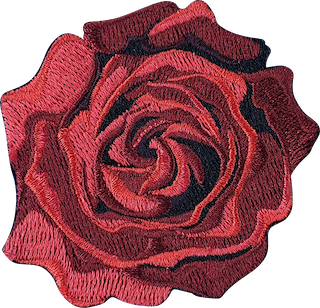
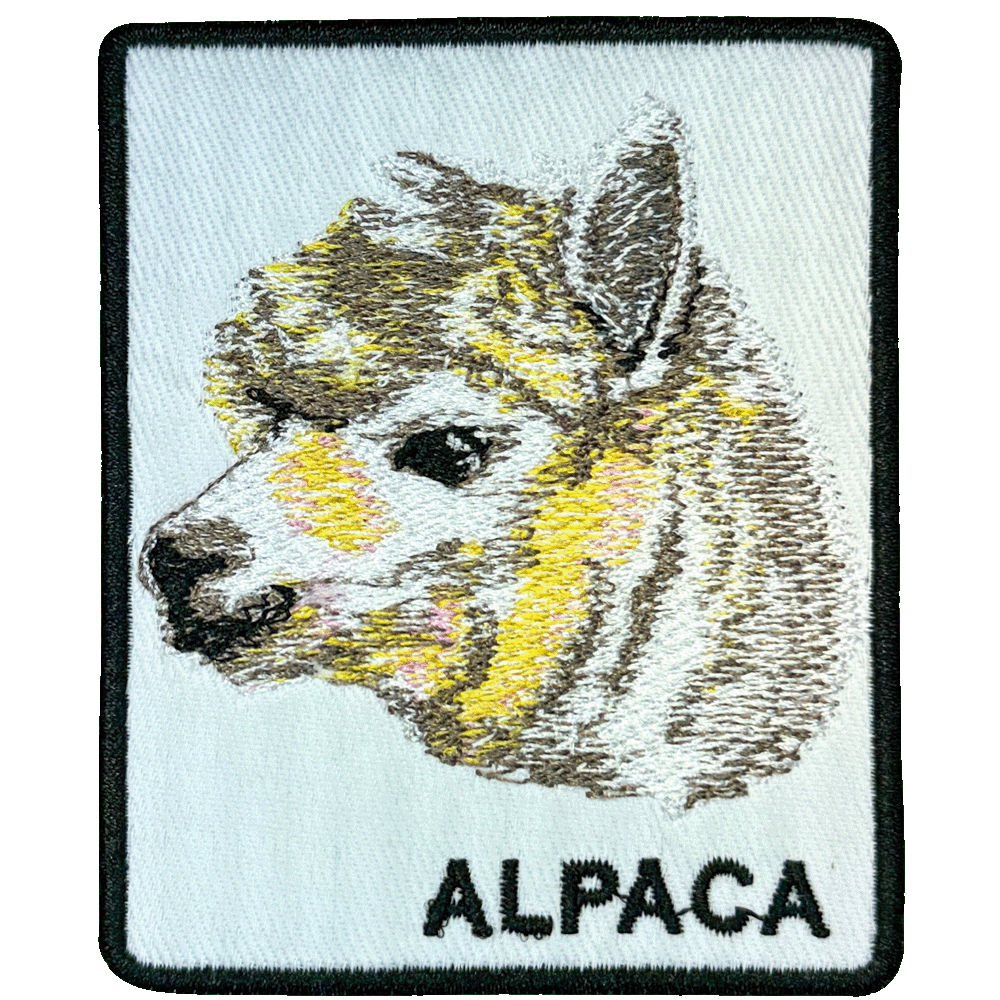
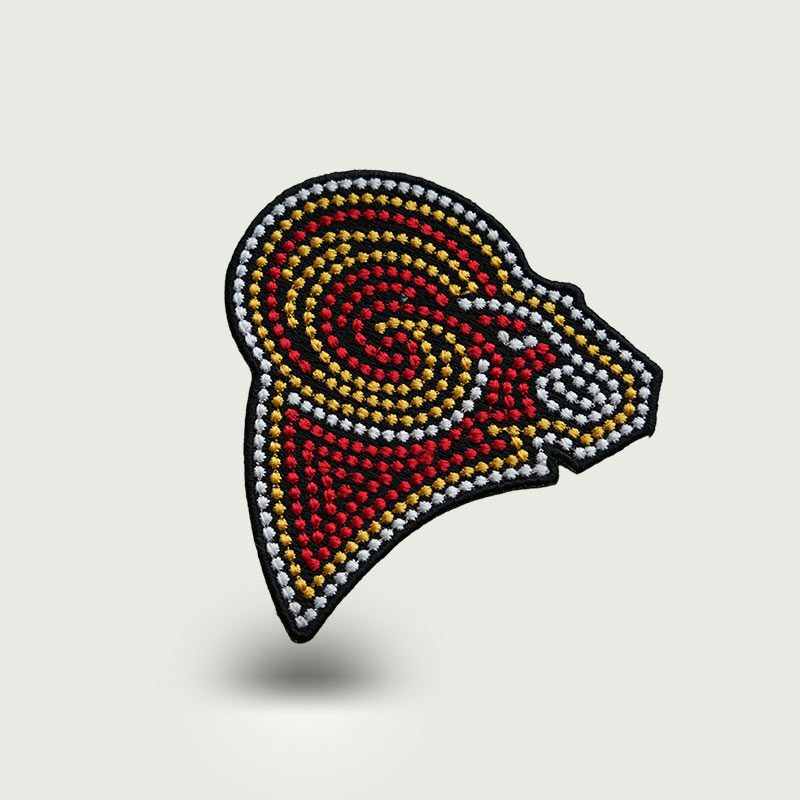
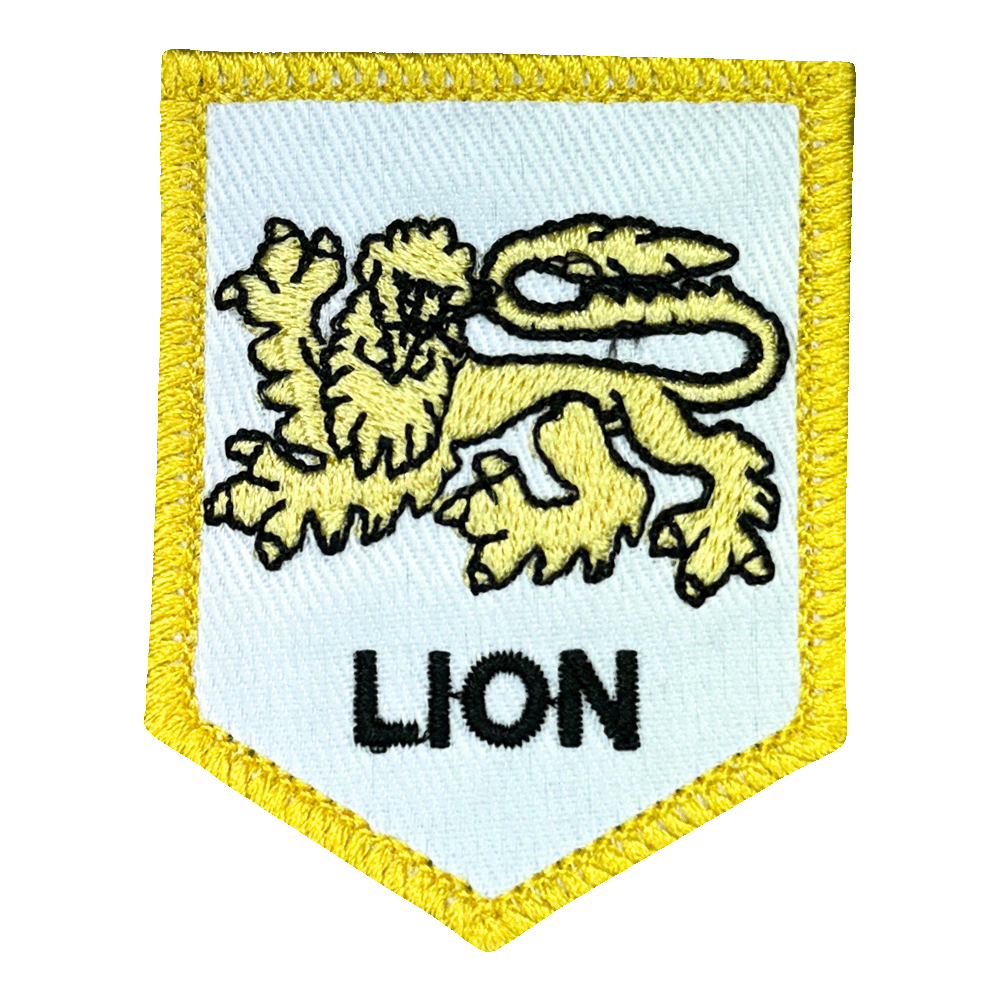
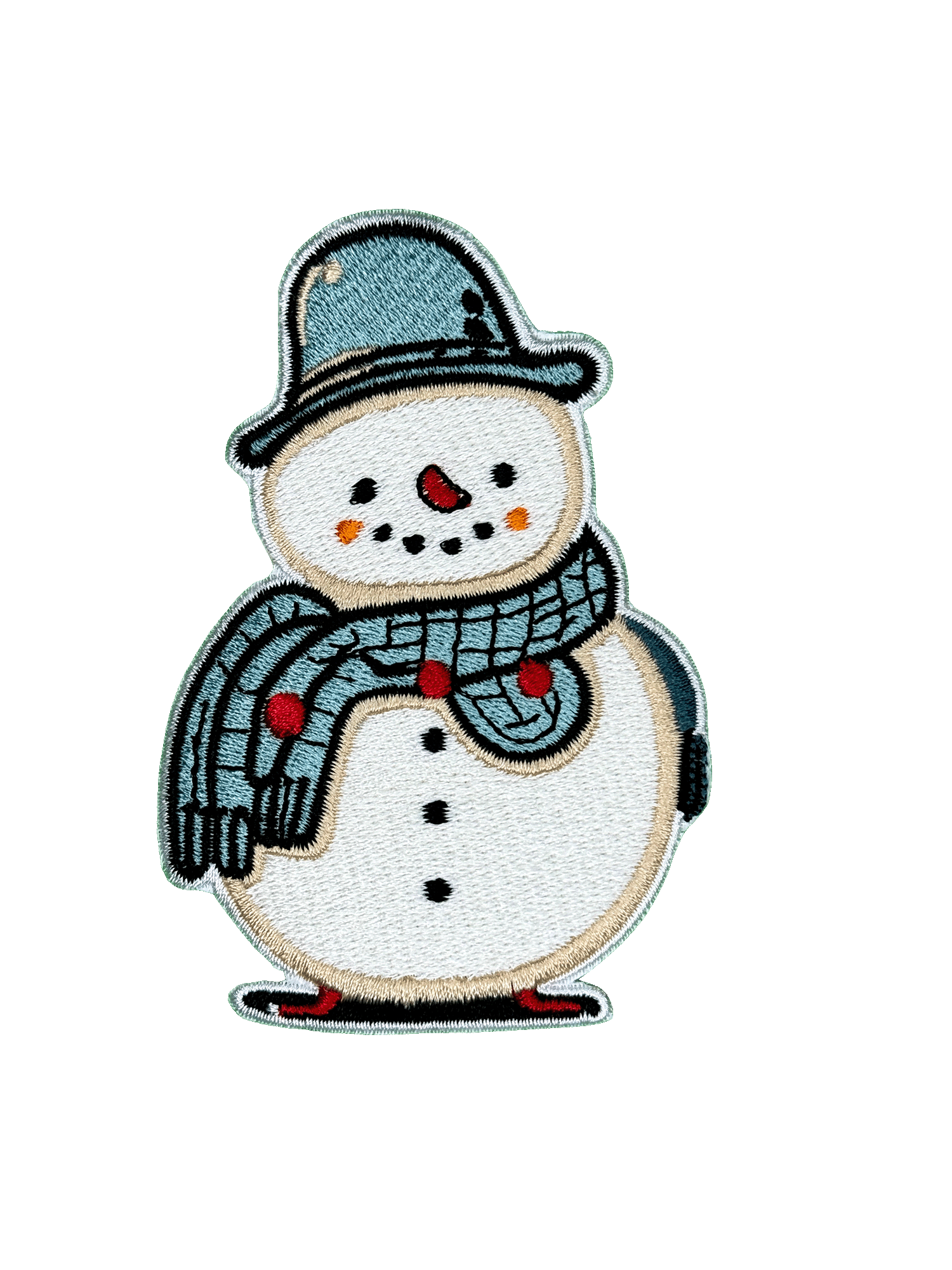
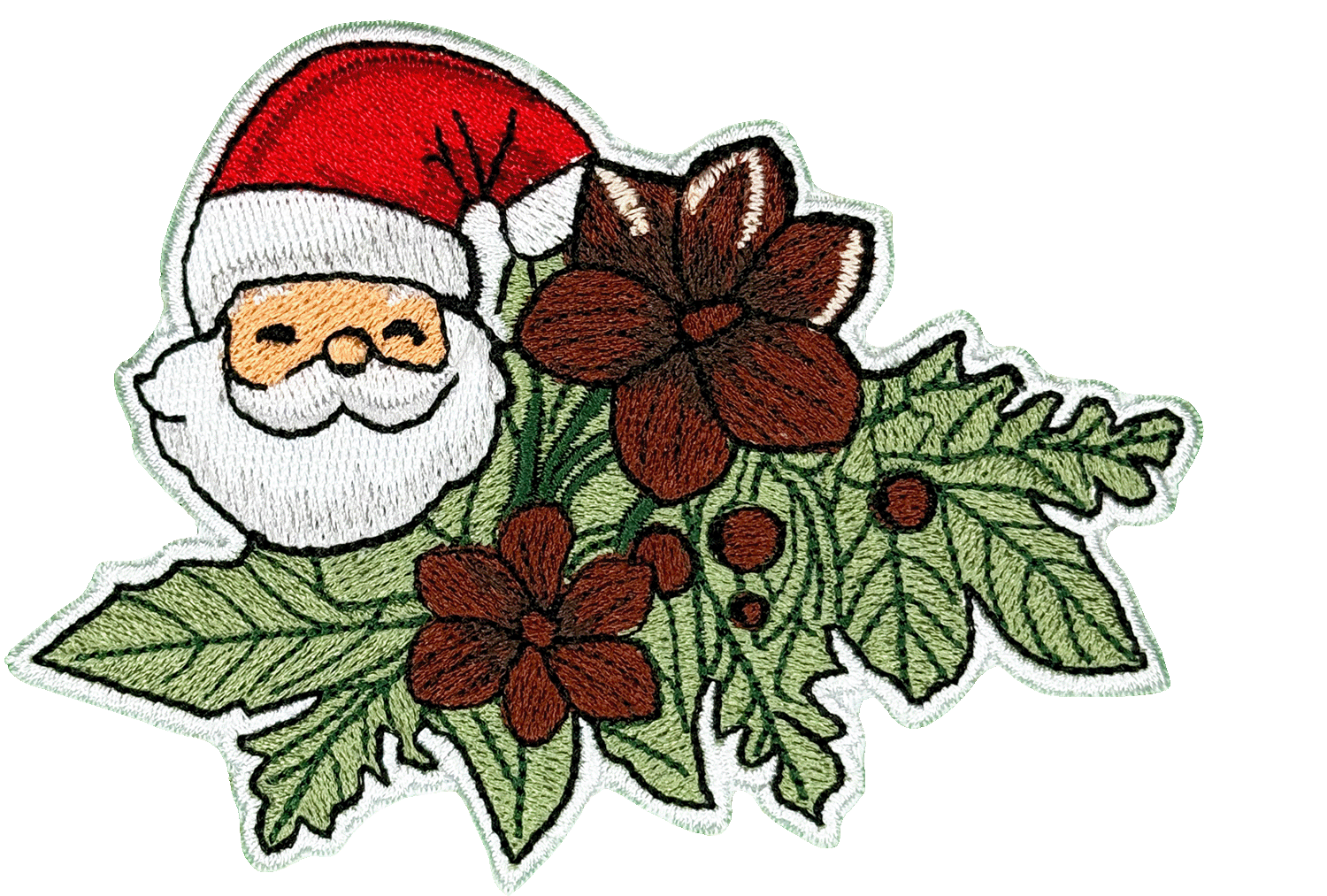
Custom Embroidered Badges with a Two-Step Approval Process
From 10 pcs per design · Lead time 7–10 working days
Free quotation, free mock-up, and expert design checks.
All backed by a two-step approval process, so you can order with complete peace of mind.
- 35+ years of embroidery experience
- 1.5 million+ designs digitised
- Two-step approval for complete peace of mind
Trust & Experience
With over 35 years in embroidery and more than 1.5 million designs digitised, we understand how artwork behaves when it’s stitched.
Not just how it looks on screen.
This allows us to prevent common problems before production.
The result is a finished badge that matches the approved design — saving time, cost, and disappointment.
Why We Offer a Free Quote & Free Mock-Up
Our free mock-up is not just a visual preview.
It is a compatibility check.
Before you commit, our team reviews your design to ensure it will embroider cleanly and consistently.
Where needed, we suggest subtle refinements without changing your design’s identity.
This gives you a clear view of how your design will translate into embroidery before approval.
- Check text, outlines, and fine details
- Confirm stitch density and spacing
- Suggest embroidery-safe adjustments
Two-Step Approval for Complete Peace of Mind
Step 1 — Free Mock-Up & Quotation
You receive a digital mock-up and a clear price breakdown across quantities.
Nothing proceeds without your approval.
Step 2 — Production Sample Approval
A real embroidered sample is produced and shared using production photographs.
Only after the sample is approved do we begin full production.
The final batch matches the approved sample in materials, process, and finish.
Approximate Pricing (6 cm Embroidered Badge)
- 10 pieces — approx. £4.75 each
- 25 pieces — approx. £3.00 each
- 200 pieces — approx. £0.90 each
- 500 pieces — approx. £0.60 each
- 1,000 pieces — approx. £0.40 each
Prices vary based on stitch count, colours, and complexity.
Final pricing is confirmed after artwork review.
Ready to Order with Confidence?
Remove uncertainty from custom embroidery.
Request your free quote and free mock-up today — and order with total confidence.
In simple terms
Definition:
Embroidered badges are fabric patches made by stitching coloured threads into a base material.
This creates a raised, textured, and highly durable finish.
Best for:
Uniforms, workwear, clubs, schools, sports teams, and organisations that need a traditional badge that holds up well to regular wear and washing.
Not ideal for:
Photographic images, very small text, or complex colour gradients.
In these cases, printed or hybrid (print + stitch) badges are usually a better choice.
Pricing and lead times
Every embroidered badge is custom-made.
Pricing is calculated based on:
- Artwork complexity
- Badge size
- Stitch count and colours
- Quantity ordered
Estimated turnaround times are displayed on this page.
For a final confirmed price and schedule, please request a quote.
Minimum order quantity: 10 pieces per design.
The approval-based ordering process
Ordering embroidered badges is a structured, approval-based process designed to avoid mistakes and ensure consistent results.
Important: Each stage begins only after the previous stage has been approved.
Delays in approval will delay production.
Step 1 — Send us your artwork or idea
Upload your logo, sketch, or description using the enquiry form.
If you don’t have final artwork, our team will advise during the mock-up stage.
Step 2 — Approve the mock-up and place the sample order
You receive a digital embroidery mock-up showing layout, size, and proportions.
This is the first approval stage.
You also see a clear price breakdown across quantities.
Once approved, you pay a sample fee.
This fee covers the cost of producing a real embroidered sample and is non-refundable.
Step 3 — Approve the production sample
We produce a physical embroidered sample using the same materials and methods as the final batch.
Clear photographs of the actual sample are uploaded for your review.
This is the second and final approval stage.
Once approved, you pay the remaining balance.
The previously paid sample fee is deducted from the final total.
Step 4 — Production and delivery
After final approval and payment, your badges are produced and dispatched according to the agreed specification and timeline.
This process ensures clarity, accountability, and predictable results for every embroidered badge order.
If you are working towards a deadline
Production time typically starts only after the production sample has been approved.
For standard quantities, this is usually around 7 working days.
Larger orders may take longer.
If you have a fixed deadline, please contact us early so timelines can be discussed before proceeding.
Call 0800 368 7414 or use
live chat
for the fastest response.
More Information
Embroidered badges are created by stitching coloured threads onto a fabric base.
This produces a raised, textured, and durable finish that is well suited to garments and accessories worn regularly.
Design behaviour and technical limits
Embroidery is a stitched process. Because of this, artwork must be adapted to suit:
- Thread thickness
- Stitch direction
- Fabric behaviour
Every design is reviewed during the mock-up stage to ensure it can be embroidered cleanly and consistently.
Gradients, shading, and printed detail
Embroidery has physical limitations.
Smooth or multi-tone colour gradients cannot be reproduced with thread alone.
In some cases, very simple gradients may be approximated using stitch direction and colour blending.
However, photographic or complex gradients are not possible in embroidery.
If a design relies heavily on gradients or printed detail, we may recommend a
hybrid solution such as Subli Stitch (print + embroidery).
This combines full-colour printing with embroidered structure and is advised only where embroidery is not technically suitable.
Fabric colours and background choice
We offer a practical range of base fabric colours suitable for most designs.
Using a coloured fabric as the background instead of stitching large solid areas is a common industry practice.
Choosing the correct fabric colour can:
- Improve overall visual clarity
- Reduce unnecessary stitch density
- Help control production costs
Fabric colours are selected from a fixed range.
Exact shade adjustments (for example, “slightly darker” or “slightly lighter”) are not possible once a fabric colour is chosen.
Text size and outlines (important)
Text readability is critical in embroidered badges.
Based on real production limits, we recommend the following guidelines:
- Text should be at least 4 mm in height to stitch cleanly and remain legible
- Multiple outlines around small text should be avoided
- Dotted or dashed lines must be at least 3 mm thick to stitch consistently
Very small text may stitch as broken or dotted lines and can become difficult to read in real-world use.
When designing your badge, consider how it will be viewed normally.
If text is too small to read at a glance, simplifying or adjusting spacing usually produces a better result.
Backing and finishing options
Embroidered badges can be supplied with different backing and edge finishes depending on how they will be applied.
These options are discussed during the quotation and mock-up stage.
Heat-seal backing is suitable for many standard garments.
However, it may not be appropriate for all fabrics.
Garments made from low melting-point materials (such as very thin nylon jackets) can be damaged by the heat required for application.
Similarly, outerwear with water-repellent or coated finishes may not bond correctly.
In these cases, alternative application methods should be considered.
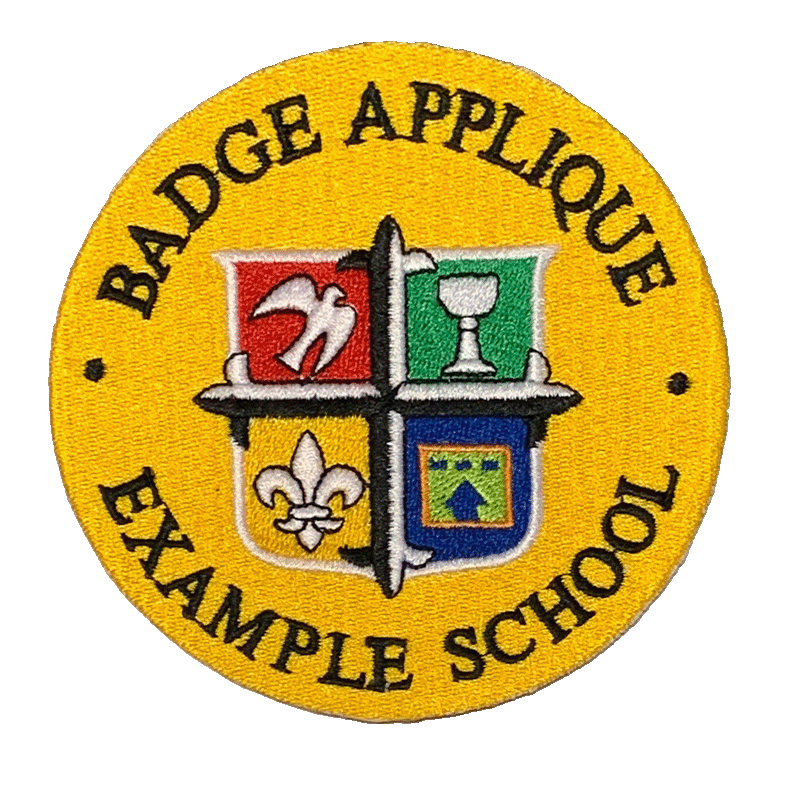
Appliqué application
Appliqué application involves producing the embroidered badge first and then stitching it onto the garment.
This method requires access to a computerised embroidery machine.
It is typically used by manufacturers or professional embroidery setups and is especially effective for improving production efficiency on large runs.
Our team will advise on whether appliqué is suitable based on the fabric, end use, and production requirements.
Use by charities, non-profit and community groups
Embroidered badges are commonly used by charities, non-profit organisations, and community groups for:
- Fundraising events
- Awareness campaigns
- Uniforms and volunteer identification
- Membership recognition
The ordering process for charity and non-profit badges follows the same
Two-Step Approval process and
minimum order quantity of 10 pieces per design
as all other embroidered badge orders.
If you are ordering badges for a charity or community-led project and have a specific deadline,
please share your artwork and get in touch early so timelines can be discussed before proceeding.
Frequently Asked Questions — Custom Embroidered Badges
Section 1: Ordering & Brand Reassurance
1) How much will it cost?
Pricing is based on badge size, stitch density, and quantity. Because we manage the entire process in-house using our own machinery, we offer competitive, manufacturer-direct pricing without any middleman markups.
Simply upload your artwork and dimensions and we’ll provide a precise quote based on your requirements.
2) When will you be able to deliver it?
Badges are often the final piece of a project deadline. Our extended 18-hour daily production schedule allows us to move quickly when needed.
While standard production timelines apply, being the manufacturer means we can often accommodate urgent or “rescue” requests — particularly where other suppliers have failed to deliver on time.
3) What kind of artwork is required? Can you help with my design?
High-resolution artwork is preferred, but our support goes far beyond file type:
- Child’s drawings: We can professionally digitize competition or school artwork while retaining the core character and spirit of the original.
- Old or faded badges: We analyse originals and recreate them with fresh, accurate thread colours.
- Low-quality images: Our team will prepare and refine the artwork before production begins.
4) Can I see a physical sample for my committee or team?
Yes. Every order begins with a digital mock-up for approval.
If you require a physical sample, this can be produced after the mock-up is approved. A sample production fee applies (refunded if you proceed with a full order), along with a non-refundable postal fee based on your location.
This allows your team to touch and feel the quality before committing to the final run.
5) We have one design but multiple names — is each name a new minimum?
No. If the base design remains the same and only the names change, we treat this as a single project with variations rather than forcing you to meet a full minimum order for each individual name.
Section 2: Expert Production Insights
6) What is the absolute minimum text size for embroidery?
Based on real production limits, we recommend a strict minimum of 4 mm text height for standard block lettering.
Below this height, the physics of thread causes stitching to “clump”, which can reduce legibility.
If your design needs ultra-fine detail or text around 2 mm, we recommend Woven Badges as the technically correct alternative.
7) I want to use Appliqué (stitched-on) patches — will they line up correctly, and is it worth it?
Yes — and when done correctly, appliqué is one of the most commercially efficient production methods available.
Workflow note: appliqué patches are produced first as a separate batch, then stitched onto garments during the final embroidery stage.
Technical reassurance: we supply precisely prepared stitch files (DST format) with clear placement guidance. Placement and tack-down lines are digitized to ensure consistent alignment, even at higher volumes.
The profit insight: stitching a dense design directly onto a garment can take significant machine time. By contrast, appliqué allows garments to be finished in minutes once the patches are ready.
This method can transform a slow run of around 30–40 garments into a highly efficient production of 200–300 garments in the same timeframe, depending on design complexity.
8) How strong is your heat-seal (iron-on) adhesive?
We use an industrial-grade, OEKO-TEX® certified adhesive that is suitable for skin contact.
- The “burnt glue” risk: Excessive heat can damage adhesive performance and cause peeling later.
- The “pressure spill” risk: Too much pressure can force softened adhesive beyond the border.
The professional standard: for workwear or garments undergoing heavy laundering, stitching is the most reliable long-term solution.
9) Merrow (Overlock) vs. Satin Stitch Border — what is the difference?
This is a technical choice between a traditional “wrapped” edge and a modern “precision” edge:
- Merrow (Overlock): a classic thick wraparound border. Because these are done on merrow machines, there is typically a small overlap point where the stitching meets. It is best for simple shapes like circles.
- Satin Stitch (Heat-cut / precision edge): a cleaner, more precise border that supports complex shapes (points, curves, and die-cut outlines). It provides a flatter, neater finish.
10) Do you offer “Peel & Stick” (sticker) backing?
Yes. We use a high-quality pressure-sensitive backing.
Light pressure is suitable for temporary event use. Firm pressure creates a stronger bond and may withstand limited washing.
Caution: on materials like nylon, this adhesive can be extremely strong and difficult to remove, so careful placement is essential.
11) Can I remove or replace a heat-sealed badge?
Yes, removal is possible by reheating the badge slightly above the original application temperature, following our guidance.
This process will leave visible adhesive residue, so the replacement badge must be at least 5 mm larger to conceal it.
Expert tip: always test removal on a sample garment first to avoid fabric distortion or shrinkage.
12) Why do you stitch your Hook & Loop backings instead of heat-sealing them?
The most common failure point we see is the bond between the badge and the loop backing.
Many suppliers rely on a heat-bond that weakens under repeated pull tension. We physically stitch the loop backing to the badge so it remains secure throughout its working life.
13) Will heavy embroidery ruin my lightweight garments?
Physics matters. A high-density embroidered badge is heavier and stiffer than the surrounding garment fabric.
On thin t-shirts or performance fabrics, the garment may pucker, sag, or distort. For lightweight materials, we may recommend reducing stitch density or switching to a Printed or Woven option to maintain the garment’s natural drape.
14) How do I prevent colour fade or badge degradation over time?
We use high-tenacity polyester threads for maximum durability. Follow our Rule of Three for aftercare:
- Cold wash only
- Wash inside out
- No tumble drying
15) How accurate are embroidery colours compared to my logo or Pantone?
We match thread colours as closely as technically possible using recognised thread charts and Pantone references.
Because thread reflects light differently than ink, exact one-to-one matches are not always possible on fabric.
Colour selection is confirmed during the mock-up and production sample stages — meaning what you approve is exactly what is produced.
If you have a deadline or need quick guidance, call 0800 368 7414 or use
live chat.
How This Compares
Embroidered badges are most naturally compared with woven badges, printed badges, and hybrid print-plus-embroidery options.
These alternatives are chosen when design detail, colour complexity, or production physics make embroidery less suitable.
Embroidered vs. Woven Badges
Expert insight: Choose Embroidered Badges for a classic, raised “3D” stitched texture and long-term durability.
Choose Woven Badges if your design contains very fine detail or lettering below 4 mm that must remain clean and legible.
Embroidered vs. Printed Badges
Expert insight: Embroidery is built for longevity and heavy wear.
If your artwork relies on photographic detail, colour gradients, or fading tones, a Printed badge is the technically correct choice to preserve that level of detail.
Embroidered vs. Hybrid (Print + Embroidery)
Expert insight: Hybrid badges combine the visual accuracy of printing with the structure and edge definition of embroidery.
This option is ideal when you need gradients or photographic detail but still want a stitched border or embroidered elements for durability and a more premium finish.
View Subli Stitch (Print + Embroidery)
The Production Rule (When to switch)
We generally recommend an alternative when a design includes fine-line detail that would clump in thread,
or when colour transitions and detail density would compromise clarity and consistency in embroidery.
“If embroidery is not technically suitable, we will recommend the closest alternative during the mock-up stage.”
Pro-Tip: The best badge is always a balance between design intent and production physics.
If a design pushes the limits of thread, we’ll tell you — before production.
Ready to Begin?
Join over 10,000 satisfied clients worldwide who trust us for exceptional custom patches. Experience the excitement of transforming your ideas into high-quality embroidered badges.
