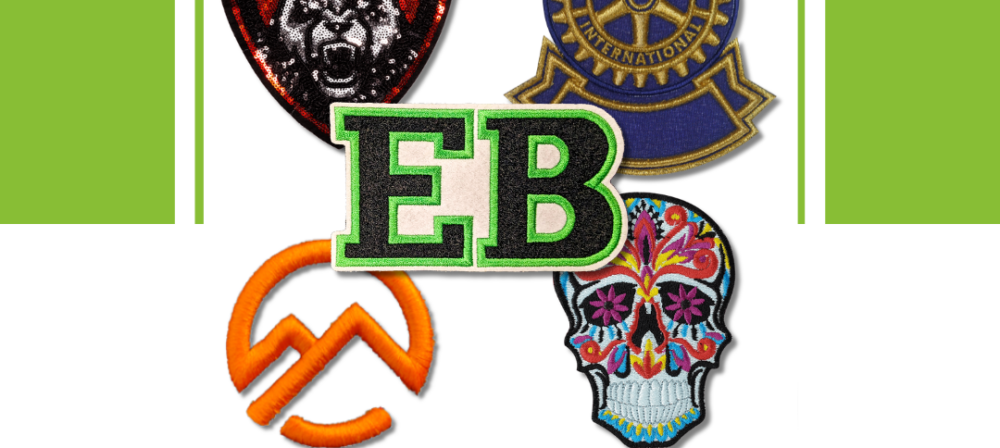
Explore the World of Custom Embroidered Patches blog introduction custom embroidered patch, embroidered, custom embroidered patches, embroidered badge embroidered custom embroidered badges Graphic displaying a variety of custom embroidered patches including a bear head, a Rotary wheel emblem, a bold green 'EB' monogram, an abstract orange design, and a colorful sugar skull, set against a green background with the title 'Explore the World of Custom Embroidered Patches'.

Explore the World of Custom Embroidered Patches

Custom embroidered patches help you present a consistent brand across uniforms, events, and merchandise—without committing to direct embroidery on every garment. In this guide, you’ll learn the practical choices that affect quality and repeatability: patch type, backing, borders, artwork rules, approvals, and care.

What are embroidered patches?

Embroidered patches are made by stitching your design onto a fabric base (often twill or felt), then finishing the edge with a border. After that, you choose how the patch will attach to the garment. Because thread has physical limits, the best results come from designs that respect stitch width, spacing, and legibility.

At Embroidery Badge UK, we manufacture embroidered patches to your specification—so whether you’re matching a brand identity, refreshing a crest, or creating uniform custom embroidered badges, you get a reliable result that can be repeated across future batches.

Application options: Iron-On (heat-seal), Sew-On, Appliqué, or Velcro. For step-by-step help, you can also review our tutorial videos for application guidance.

Why choose custom embroidered patches?

Impactful branding

Your logo or message looks more “official” when it’s stitched, not printed. As a result, patches work brilliantly for workwear, clubs, events, and retail merchandise. They also let you standardise branding across multiple garments, even when garments come from different suppliers.

Durability

With sensible artwork and correct finishing, embroidered patches can handle repeated wear and washing. For example, a clean border and sensible text size helps prevent fraying, while good stitch spacing keeps fine details clearer over time.

Versatility

You can apply patches to jackets, hats, bags, workwear, sports kits, and uniforms. In addition, Velcro-backed options make sense when you need quick swaps for roles, ranks, or limited-edition drops.

Patch options we offer

Different designs suit different build methods. Therefore, choose the patch type based on detail level, texture goals, and how the item will be used.

  • 100% Embroidered Patches: Fully stitched patches with a bold, textured finish.
  • Partial Embroidery with Visible Fabric (twill or felt): A cost-effective option for larger areas of solid background colour.
  • 3D Puff Embroidered Patches: Raised embroidery for prominent text and standout elements.
  • Chenille Embroidered Badges: A classic “towel” texture popular for varsity and sports looks.
  • Faux Chenille Embroidered Badges: A chenille-style look using thread technique for sharper edges and tighter colour control.
  • Eco-Green Badges: Manufactured using embroidery thread made from recycled PET bottles for a more sustainable choice.
  • Special Stitch Badges: Premium stitch effects that add structure and definition beyond standard embroidery.

Design tips for better results

Good embroidery starts with good artwork. So before you order, use these rules to avoid the most common quality issues.

  • Keep the design recognisable: Aim for readability from 2–3 feet away.
  • Clarify the purpose: Uniform, branding, event, or decorative use can change the best patch type and finish.
  • Prioritise a clean centre: Too many small elements reduce legibility once stitched.
  • Minimum text size: Keep small fonts at least 5mm tall so embroidery stays readable.
  • Choose the right size: Match proportions to where it will be applied (chest, sleeve, cap, bag, etc.).

The ordering process

Step 1: Request a quote

Send your artwork and requirements (size, quantity, backing type). Then we confirm pricing and turnaround based on your specification. If you already know what you want, you can place a quote directly on our website.

Step 2: Artwork and approval

Next, we prepare a production-ready digital proof for approval. Importantly, this is where you confirm sizing, text legibility, and any layout adjustments required for embroidery.

Step 3: Production

After approval, we manufacture using the agreed materials, backing, and border style. This approach helps keep results consistent, especially when you re-order later.

Step 4: Quality control and shipping

Finally, we check batches before dispatch and ship to your delivery address so your patches arrive ready to apply or distribute.

Care instructions

Simple care keeps patches looking sharp for longer. For best results:

  • If the patch is sew-on, use a gentle wash cycle or hand wash where possible.
  • Avoid bleach or harsh chemicals that can weaken thread and fabric.
  • Air dry when possible, because high dryer heat can affect materials over time.
  • If you need to press, use a cloth barrier and low heat.

Summary

When ordering custom embroidered patches, focus on patch type, size, border, backing, and legibility rules. With the right build choices, embroidered patches become a durable, professional branding tool you can repeat across uniforms, events, and merchandise.
Place a Free Quote

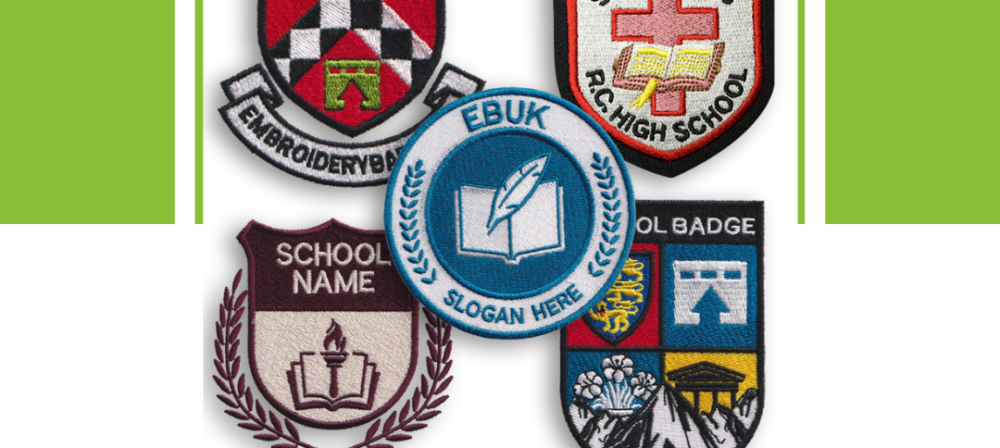
school Uniform badges school Collection of embroidered school badge designs including crests, shields, and an open book logo on a green background with the headline 'Everything to Know about School Uniform Badges'.

Everything to Know about School Uniform Badges

School Uniform Badges remain one of the most effective ways for schools to establish identity and create a strong first impression. However, as schools prepare for 2026, badges are no longer just about branding. Instead, they have become a strategic tool for balancing appearance, affordability, and compliance.

As a result, many schools are now adopting a flexible approach built around one simple idea: the badge + plain garment method.

School Uniform Badges make this approach practical, scalable, and future-proof.

Embroidered school uniform badge with detailed school crest

Navigating the 2026 landscape: affordability and compliance

The conversation around school uniforms has changed significantly. In recent years, the Children’s Wellbeing and Schools Bill and Department for Education (DfE) guidance have placed greater emphasis on keeping uniform costs affordable for families.

By 2026, schools will face clearer expectations to limit the number of compulsory branded items parents must purchase.

Because of this, many schools are asking an important question.

How can we protect our school identity without forcing parents to buy expensive, bespoke garments?

The answer is straightforward. Schools can use high-quality uniform badges that apply to affordable, plain garments sourced through a wide range of retailers.

This approach allows parents or uniform suppliers to purchase cost-effective blazers and jumpers. At the same time, the school crest remains consistent, recognisable, and compliant with affordability guidance.

School children wearing uniform with school badge applied

Smart sourcing: a cost-effective solution for schools and suppliers

Whether a school manages uniform supply internally or works with a trusted local retailer, the cost of the badge itself plays a central role in affordability.

For this reason, Embroidery Badge UK supports a smart sourcing model that benefits everyone involved.

  • For schools: Buying badges directly helps maximise savings that can be passed on to parents or applied in-house.
  • For suppliers: Trade-level pricing supports healthy margins while keeping shelf prices competitive.

In practice, direct sourcing removes unnecessary cost inflation from the badge itself. This keeps schools, suppliers, and families aligned with 2026 affordability expectations.

Versatility in design and application

Cost matters, but durability matters just as much. A school badge often outlasts the garment it is attached to.

  • Embroidered badges: A traditional option suited to polo shirts and jumpers.
  • Woven badges: Ideal for blazers that require sharp detail or fine text.
  • Silicone / TPU badges: A modern, durable choice for sports kits and PE bags.
  • Iron-on or adhesive options: These offer flexibility for easy application by parents or staff.

School reputation reinforced through a high-quality school badge

A strong brand that represents quality

Affordability does not mean lowering standards.

A well-designed badge shows attention to detail and pride in presentation. Tight stitching, accurate colours, and clean outlines all contribute to a school’s reputation.

As a result, students feel a stronger sense of belonging, while parents see that value and quality can coexist.

Preparing confidently for 2026

Embroidery Badge UK supplies personalised school badges across the UK and works with both schools and uniform retailers.

Through direct manufacturing, bespoke design support, and consistent quality control, we help schools protect their identity while meeting affordability guidance.

Get a quote for your school badges

Explore our range of school uniform badges

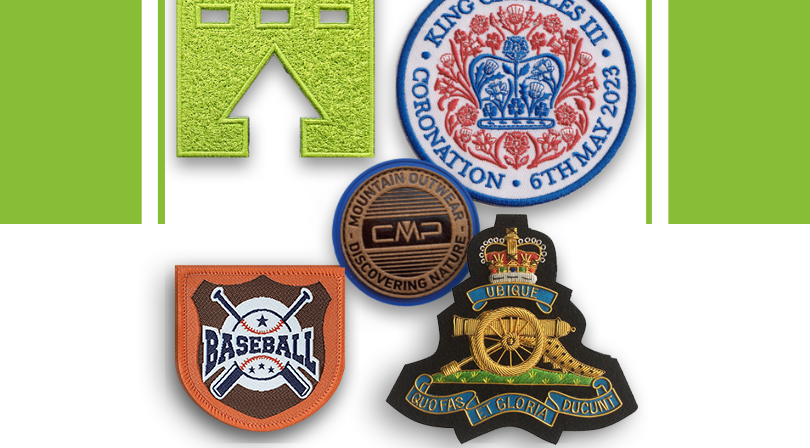
iron on patches customize clothing personalize your wardrobe embroidered designs heat-sensitive adhesive sew-on patches no sewing skills required secure bond durability repeated washing and drying long-lasting choose the right patch color and style clothing personalization DIY patches custom patches embroidered patches versatile and stylish Promotional collage of assorted embroidered patches on a green background, including a King Charles III coronation emblem, a baseball badge, a vintage crest, and a lime green letter patch with the phrase 'Enhance Your Business Image with Iron-On Patches' at the bottom.

Enhance Your Business Image with Iron-On Patches

Iron-on patches are a simple way to personalise clothing and strengthen your brand image. Whether you’re building uniforms, merchandise, or event giveaways, iron-on patches help your logo get seen in the real world. Below are practical ways iron-on patches can support your business.

Brand identity

Brand identity is critical for any business, and custom iron-on patches can help you build it. A clear patch design can communicate your logo, message, and values. It also helps your brand stand out from competitors and stay memorable.

Promote brand awareness

Iron-on patches can work as low-cost marketing. You can include them as freebies with orders, give them away at events, or sell them as merchandise. When people wear patches on jackets, backpacks, and hats, your branding travels with them.

Employee uniforms

Custom patches are a strong addition to uniforms. They create a consistent professional look and make staff easy to identify. A logo patch can also make uniforms feel more premium and “official”.

Product packaging

Patches can add a unique branded touch to packaging. For apparel brands, a patch-style add-on can feel like a collectible bonus. For other products, a patch can be used as a branded insert or packaging detail that customers remember.

Special events

Patches are perfect for events, clubs, launches, and promotions. You can design them around a theme or logo so they become a keepsake. They also help identify staff, volunteers, or members during the event.

How to design iron-on patches

Designing iron-on patches is easier when you follow a clear checklist.

Choose your design

Start with a design that’s easy to recognise. A logo, slogan, or bold icon usually works best. Some designs suit embroidery, while others look better as printed patches (especially if the artwork has gradients or fine detail).

Choose your colours

Use your brand colours where possible. If your brand uses specific shades, keep them consistent across marketing and uniforms. You can also add one contrasting colour to improve visibility.

Choose your size and shape

Select a size and shape that suits where the patch will be applied (chest, sleeve, cap, bag, etc.). You can also choose different patch styles depending on the look you want, including embroidered patches, woven patches, and PVC patches.

Choose your backing

Backing options include heat-seal (iron-on), Velcro, and adhesive. Choose based on how the patch will be used and how often the item will be washed.

Conclusion

Iron-on patches are a versatile way to improve brand visibility and create a more professional look across uniforms, products, and events. With the right design, colours, and backing, patches become a valuable branded asset you can reuse across campaigns and repeat orders.

Get a quote

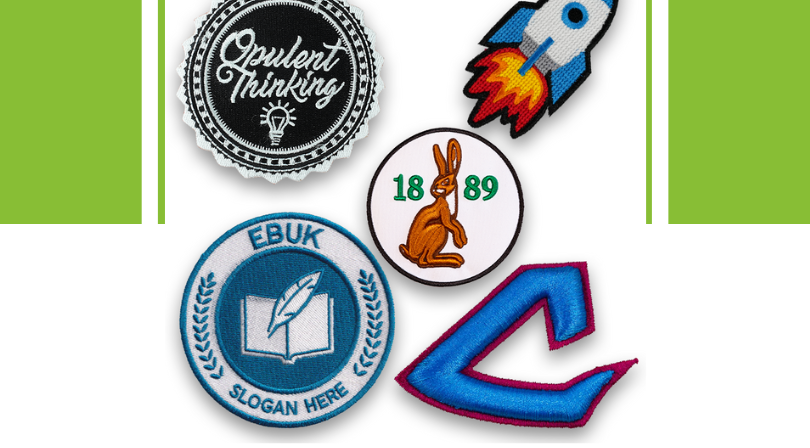
Embroidered patches Custom design 2023 (or any upcoming year) Key considerations Badge Sew-on patches Iron-on patches Custom logo Brand identity Personalization Graphic showing various custom embroidered patch designs including a circular 'Opulent Thinking' patch, a rocket ship patch, a round patch with a bunny and numbers '18 89', a blue round EBUK patch with an open book, and a stylized red and blue 'C', accompanied by the text 'Custom Embroidered Patches: 10 Key Considerations in 2023'.

Custom Embroidered Patches: 10 Key Considerations in 2026

Custom embroidered patches are being designed very differently than they were just a few years ago.
Today, AI is the starting point for most artwork. However, AI designs often ignore real manufacturing constraints.
They miss stitch density, fabric behaviour, minimum line widths, tiny text limits, and fake 3D shading that thread simply cannot recreate.
That’s where we protect brands. We turn digital ideas into custom embroidered patches that can be made, worn, and repeated consistently — batch after batch.

Simple rule: if your artwork includes micro-text, ultra-thin outlines, heavy gradients, or “fake 3D” lighting, it needs a production-minded rebuild (or a hybrid method) before it goes anywhere near a machine.

Quick Manufacturing Match (So You Choose the Right Method)

Classic stitched look

Embroidery suits bold shapes, clean lettering, and that traditional raised texture.

Tiny detail and small text

Woven stays sharper for fine lines, small lettering, and crest detail that embroidery can soften.

Gradients and photo texture

Hybrid print + stitched border keeps clarity when thread alone can’t replicate the artwork.

10 Essential Strategic Considerations for Custom Branding

  1. AI-Generated Artwork Compatibility Audit

    Most submitted artwork now starts as AI-generated. AI can produce impressive visuals fast, but it doesn’t understand the physics of thread and fabric. It also ignores stitch density, pull compensation, and production tolerances. That’s why we audit every AI-generated artwork file before we commit it to production. Backed by 35+ years of manufacturing experience and over 1.5 million designs processed, we rebuild AI concepts into stable, repeatable embroidery.

  2. The Hybrid Evolution (Print + Embroidery)

    Many modern brand visuals include micro-detail, gradients, or photo-like texture. Thread can’t reproduce those cleanly, especially at small sizes. Therefore, our Hybrid Print + Embroidered-Effect patches combine high-definition print with stitched borders. As a result, you keep the artwork sharp while still getting a premium stitched finish.

  3. Cap Branding Revolution (Stahls’ 360 IQ)

    Cap hooping used to slow production and introduce alignment risk. Today, systems such as the Stahls’ 360 IQ remove that bottleneck. Our patches apply cleanly to curved headwear with accurate positioning. Consequently, a standard heat press becomes a fast, repeatable branding station.

  4. The “Spares” Advantage for Repeat Orders

    Smart buyers often order more patches than garments. For example, a 250-unit run might include 300 patches. Those spares prevent delays later because you can cover replacements, new starters, and small top-ups instantly. In addition, you avoid fresh digitising and setup costs for minor repeat quantities.

  5. Operational Efficiency (The Appliqué Method)

    Dense direct embroidery ties up machine time and increases cost quickly. Instead, the appliqué method secures a pre-made patch using a tack-down line. This boosts throughput dramatically. At the same time, it keeps the inside of the garment cleaner and more comfortable.

  6. Border Architecture: Merrow vs Satin

    Traditional Merrow (overlock) borders are manual by nature, so they usually include a small overlap bump. In contrast, Satin Stitch (Precision Edge) borders deliver cleaner symmetry and sharper outlines with machine-level consistency. Therefore, satin borders are often the better choice for modern, premium branding.

  7. Attachment Safety & Skin-Safe Materials

    Backing choice affects durability, wash performance, and comfort. For example, a uniform badge needs reliable hold and stable edges across repeated laundering. Therefore, we use industrial-grade, skin-safe backing systems designed for daily wear and modern uniform standards.

  8. Thread & Material Freshness (Consistency Across Batches)

    Thread and fabric can behave differently when stock sits unused for too long. That drift can show up as tension variance, colour inconsistency, or uneven coverage. To prevent that, we run a lean-stock approach and controlled production checks. Consequently, you get consistent results across batches and repeat orders.

  9. Two-Step Approval Safety Net

    Most problems happen when screen previews don’t match what production delivers. To avoid surprises, we use a two-step approval process. First, you approve the digital layout. Then, you approve a high-resolution production sample scan. Only after confirmation do we begin full production.

  10. Flight Tags & Soft-Touch Merchandise

    Branding has expanded beyond garments. Textile flight tags and fabric keyrings are now popular because they’re lightweight, dashboard-safe, and ideal for merch bundles. As a result, they suit modern soft-touch merchandise trends while still carrying strong brand presence.

UK Oversight from Harrow

Our Harrow office and limited-production facility enables faster communication and tighter quality control.
Meanwhile, larger-scale production continues through our established global manufacturing network.

Explore custom embroidered patches

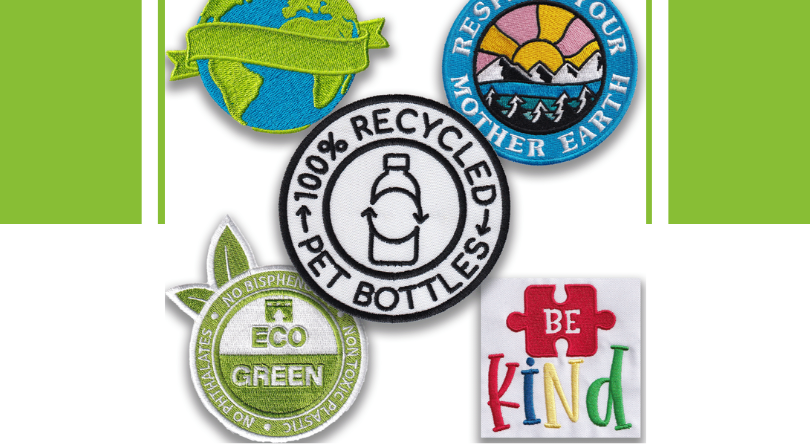
sustainable fashion recycled materials recycled material recycled thread organic clothing sustainable fabric sustainable fashion Graphic displaying a collection of eco-friendly embroidered badges including an Earth with a leaf, a 'Respect Your Mother Earth' patch, a '100% Recycled rPET Bottles' badge featuring a penguin, an 'Eco Green' badge, and a 'Be Kind' puzzle piece, accompanied by the slogan 'Embrace Sustainable Fashion With Our Eco Green Badges'.

Embrace Sustainable Fashion with Our Eco Green Badges

Sustainable fashion is no longer a trend — it is a responsibility. At Embroidery Badge UK, we support responsible manufacturing by producing Eco Green Badges, durable embroidered badges made with Madeira Poly Green, a recycled embroidery thread designed for long-term use.

Responsible embroidery for modern brands

Eco Green Badges help brands reduce environmental impact without sacrificing quality. By combining recycled materials with proven embroidery methods, we deliver consistent results that meet professional standards while supporting more ethical production choices.

What makes Eco Green Badges environmentally responsible?

We use Madeira Poly Green thread because it supports the circular economy. The manufacturer produces this thread from 100% post-consumer recycled polyester. As a result, plastic waste is reused instead of entering landfill. In simple terms, the thread comes from recycled plastic bottles.

Designed for durability and daily wear

Eco-friendly products must also perform reliably. For this reason, Madeira Poly Green thread delivers strong stitch integrity and excellent colour fastness. Eco Green Badges retain their appearance after repeated washing and regular use. Therefore, they suit uniforms, sports clubs, ethical fashion brands, and workwear programs that demand consistency.

Certified and safe for skin contact

Madeira Poly Green carries OEKO-TEX Standard 100 certification. Independent laboratories test the thread for harmful substances. Because of this, it remains safe for direct skin contact. Consequently, brands can choose recycled embroidery materials without compromising wearer comfort or safety.

Why material choices matter

Every production decision affects environmental impact. When organisations choose Eco Green Badges, they support responsible sourcing and waste reduction. In addition, these choices communicate clear values to customers, staff, and communities.

Finally, explore our eco-conscious badge options online. If you need custom sizes, colours, or designs, our team will guide you through recycled embroidery solutions that fit your application.

Place a Quote

Fashion Badges

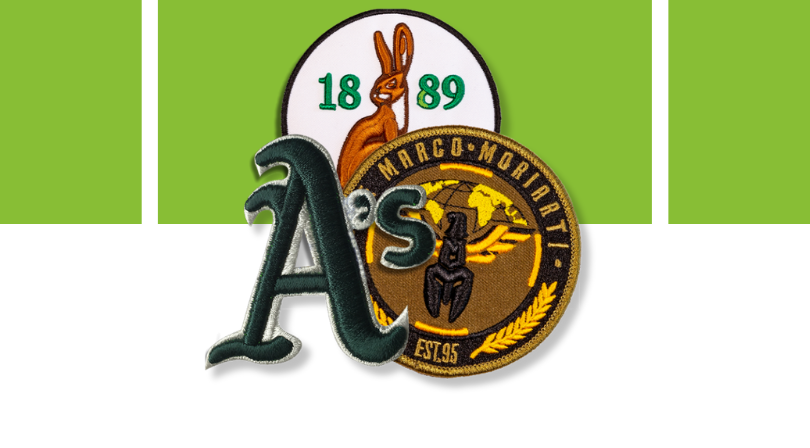
3d puff 3d foam cap design made easy free product badges 3d puff badges 3d embroidery embroidered badges cap badges patches for caps Promotional graphic featuring an assortment of embroidered 3D puff badges— including a green 'A' with rabbit crest, a round emblem with 'Marco-Morivert' text, and 'ASL' letters—set against a green and white background with headline '5 Most Asked Questions on 3D Puff Badges'.

The 5 Most Asked Questions about 3D Puff Badges

The 2026 Guide to 3D Puff Badges is for brands that want their identity to literally stand out. If you’re working with premium headwear, structured streetwear, or heavy garments, 3D Puff (foam-raised) badges remain the gold standard for sculpted branding.

However, not every logo is suitable for 3D Puff — and in 2026, honesty matters more than hype. Below is everything you need to know before committing to foam-raised embroidery.

1. What are 3D Puff Badges in 2026?

3D Puff badges are bespoke embroidered patches where a high-density foam core is placed beneath the stitching. This creates a raised, sculpted finish that physically stands proud of the garment.

Beyond basic thread: At EmbroideryBadge.uk, we no longer rely only on standard polyester. We now offer Metallic, Neon, and Glow-in-the-Dark threads engineered to stretch cleanly over foam without snapping.

The hybrid trend: Many modern brands combine flat embroidery + 3D puff within the same badge. This creates controlled depth without overwhelming the design.

2. Design Mastery: The “Chopstick vs Toothpick” Rule

With over 35 years of embroidery experience, we know that not every logo is born ready for 3D. When you request a free mockup, we physically evaluate your artwork using real-world stitch logic.

  • The Chopstick (3–8mm): Strokes roughly the width of a chopstick allow satin stitches to wrap the foam securely and rise cleanly.
  • The Toothpick (<2mm): Thin lines shred foam instead of covering it. These areas collapse and lose definition.
  • The Bridge Limit (>12mm): Very wide stitches form “bridges” that can snag on zips or buttons during wear and washing.

Our expert guarantee: When you place a quote, we provide a free digital mockup within 24 hours. If your design isn’t suitable for 3D Puff, we won’t just reject it — we’ll suggest precise stroke-weight adjustments to salvage it. If we know it won’t look 100% right, we’ll be honest and advise against 3D.

3. How do I know if my badge is NOT suitable for 3D Puff?

This is the most important question — and the one most suppliers avoid.

In reality, 30–50% of 3D Puff enquiries are not immediately suitable. Around half of those can be rescued through design adjustments. The rest should never be produced in 3D.

This is where customers win with us:

  • You get a free mockup before spending anything.
  • We show you exactly which areas will fail in foam.
  • We suggest fixes — or clearly tell you when 3D is the wrong technique.

This prevents wasted money, missed deadlines, and the chaos that often comes from ordering blindly from low-knowledge suppliers.

4. Advanced Attachment & Precision

3D foam has a low melting point, so attachment must be controlled carefully.

  • Bottom-heat presses: Heating from beneath the garment bonds the badge without crushing the foam.
  • Curved hat presses: For caps, we apply even 360-degree pressure that preserves the puff.

5. Sustainability: The 2026 Green Standard

Your branding shouldn’t cost the Earth.

  • Recycled materials: We offer 3D Puff badges made with GRS-certified recycled polyester derived from post-consumer plastic.
  • Ethical production: All badges are produced in Sedex-audited facilities using foams and dyes free from harmful chemicals.

5 Most Asked Questions (2026 Edition)

  • What is the MOQ? 50 pieces.
  • Can they be washed? Yes — wash at 30°C and air dry to protect foam shape.
  • Do they work on T-shirts? No. 3D Puff requires structured fabrics (300gsm+ hoodies, denim, caps).
  • How fast is delivery? 7–14 working days after mockup approval.
  • Can I see it first? Yes. You receive a digital mockup within 24 hours and a high-resolution photo of the first stitch-out before final production.

Place a Quote

3D Puff Badges


[/vc_column_text][/vc_column][/vc_row]